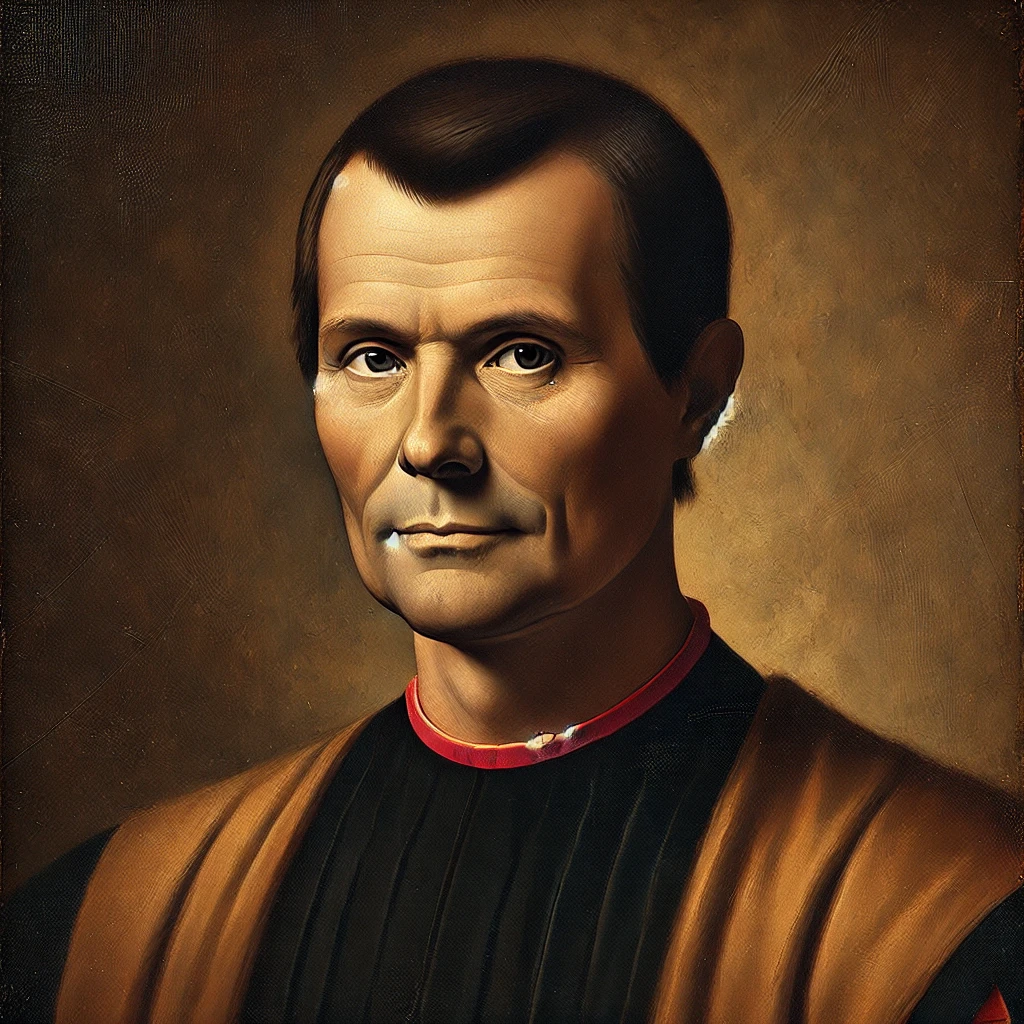
Niccolò Machiavelli, born in 1469 in Florence, Italy, is one of the most influential political philosophers and writers of the Renaissance. Raised during a time of political upheaval and warfare in Italy, Machiavelli’s career as a diplomat and political advisor for the Republic of Florence exposed him to the inner workings of power and statecraft. His firsthand experiences with shifting alliances, wars, and the volatile nature of political authority heavily influenced his later writing. After being ousted from his position during a political coup and briefly imprisoned, Machiavelli retreated from public life and focused on writing.
Machiavelli’s most famous work, The Prince (published posthumously in 1532), is a treatise on political power and leadership that remains a cornerstone of political philosophy. In this short but impactful work, Machiavelli presents a pragmatic, often stark view of power, arguing that rulers must be willing to use cunning, deceit, and, when necessary, ruthless tactics to maintain stability and achieve their ends. The phrase “the ends justify the means” is often attributed to Machiavelli, capturing the essence of his argument that effective leadership may require morally ambiguous actions.
Readers and scholars are drawn to The Prince for its candid, unsentimental portrayal of political strategy. Unlike the idealistic works of many of his contemporaries, Machiavelli’s writing embraced realism and practical wisdom, making him a figure both admired and criticized for his perceived cynicism. His approach earned him the reputation of being the father of modern political science and gave rise to the term “Machiavellian,” used to describe cunning and strategic manipulation in politics and beyond.
Machiavelli’s work, with its clear, concise prose and penetrating analysis of power dynamics, continues to captivate readers interested in politics, leadership, and human behaviour. His insights into the complexities of authority and governance resonate to this day, offering valuable lessons on the nature of power and the realities of leadership in any era.