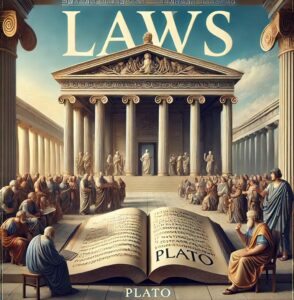
Plato’s Laws is his last and one of his longest dialogues, where he constructs a detailed legal system for a hypothetical city called Magnesia. Unlike his earlier work, “The Republic,” which outlines an ideal society governed by philosopher-kings, “Laws” proposes a more practical approach to governance, where laws, not rulers, hold supreme authority. The dialogue covers wide-ranging topics including laws about marriage, education, and governance, emphasizing moderation and the role of music and gymnastics in moral education. This work attracts readers interested in political philosophy and the practical applications of Platonic thought to societal structures, offering a comprehensive view on how to balance individual rights with communal responsibilities.