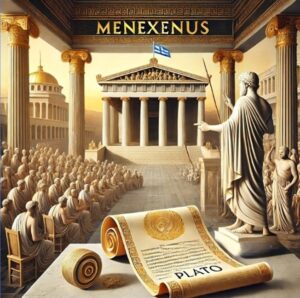
In Plato’s Menexenus, Socrates presents a funeral oration that critiques the genre by parodying the speeches typically given by Athenian statesmen. The dialogue features Socrates reciting a speech supposedly taught to him by Aspasia, the companion of Pericles, highlighting themes of patriotism and the valour of Athens. Through its satirical tone, Plato examines rhetoric’s role in shaping public perception and the manipulative power of eloquent speech. This dialogue attracts readers with its unique blend of historical critique and philosophical insight, revealing the complexities of political communication and memory in Athens.