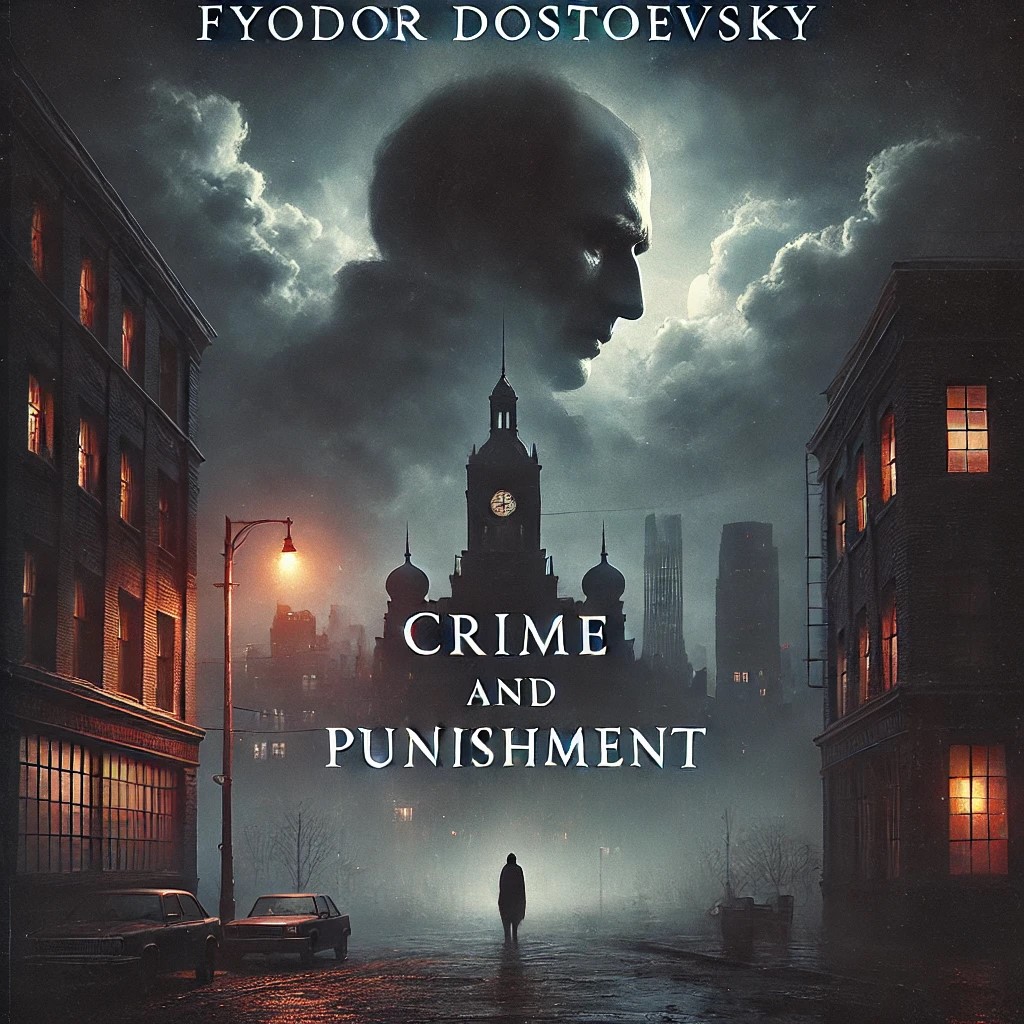
Fyodor Dostoevsky, born in 1821 in Moscow, Russia, stands as one of the towering figures in world literature, renowned for his profound exploration of the human psyche and the moral dilemmas that define existence. His life, punctuated by personal turmoil and existential struggle, infused his works with a deep sense of empathy and philosophical inquiry. Early on, Dostoevsky faced hardship, losing his mother to tuberculosis and witnessing his father’s violent death. These early traumas, coupled with his subsequent experiences—including his arrest for political subversion, mock execution, and years of hard labour in a Siberian prison camp—shaped his view of humanity’s capacity for suffering and redemption.
Dostoevsky is most famous for Crime and Punishment, a novel that masterfully delves into the psychological torment of its protagonist, Raskolnikov, who grapples with guilt after committing murder. Readers are captivated by Dostoevsky’s ability to weave intricate moral questions into a gripping narrative that challenges the boundaries between good and evil. His other seminal works, such as The Brothers Karamazov and The Idiot, further explore the complexity of faith, free will, and the inherent struggle between reason and spirituality.
Dostoevsky’s writing is firmly rooted in the genre of philosophical fiction and psychological realism. His prose, though often dense, is filled with dialogue that exposes the inner workings of his characters’ minds, revealing profound truths about human nature. He was a master of paradox, using conflicting viewpoints to create characters whose internal conflicts reflect broader societal and existential dilemmas.
Readers are drawn to Dostoevsky’s work for its depth, emotional intensity, and exploration of the darkest and most redemptive aspects of the soul. His novels challenge readers to confront uncomfortable truths about morality, justice, and the human condition. Dostoevsky’s legacy lies in his unmatched ability to make literature not just a form of storytelling but a vessel for existential inquiry, one that continues to resonate with those seeking to understand the complexities of life and the nature of consciousness.